
Fire Death In Yorktown: Clutter Prevented Rescue

March 21st, 2011

A few hours ago, a fast-moving fire took the life of an elderly woman in Yorktown Heights.  It was noted several time throughout the newscast that firefighters did all they could to rescue the lone resident of the home.

While the cause is still being investigated, firefighters told News 12 that the amount of debris in the house made searching for, and the attempted rescue of the victim very difficult.

In January 2008, under eerily similar circumstances, an elderly couple in Yonkers also lost their lives when their home caught fire and firefighters could not navigate the home to search for them, due to piles and piles of debris-many 5 feet tall or more.

While we are probably all guilty of letting clutter accumulate from time to time, this much stuff is not clutter, it’s a deadly hazard.

In the event that any emergency worker is needed in your home, precious moments are lost when clear access to, and through rooms is not available. 

 Children’s toys, too much furniture, piles of paper or magazines, even ‘neatly’ stacked boxes-anywhere in the home-can contribute to a tragedy.

Senior citizens, often with diminished mobility and limited social contacts seem to be the most as-risk.

  They may not have the strength or funds to remove things, they may be embarrassed to ask for help, or they may just not recognize the danger.   To that end:

-Clean out: sell, donate, recycle what you don’t want/need, and get off-site storage for what you must keep, but don’t need or use regularly.

-Make sure you have the correct number of smoke, fire and CO2 detectors in place. It is simple, cheap and smart; it is also the  law. Test the batteries monthly, vaccumn dust out regularly, and change batteries at least once a year.

-Reach out to your neighbors, especially the senior citizens.  Check in, know who-and where the rest of their family is, and how to reach them. 

The town of East Rochester NY will always have my deepest gratitude: their keeping a collective eye on Grandma Stella let her stay in the town she always lived in, and gave us-7 hours away-real peace of mind.

 If they need help with chores, offer- or research it within your community. Most high schools have community service as a requirement for graduation now, and here in Westchester, the Volunteer Center can point you in the right direction.

-While you don’t want to interfere, or violate any one’s privacy, if you do notice any dangerous conditions,  let family, and/or officials know.   And spread the word!  As the poet Robert Louis Stevenson once simply noted, “Take care of each other”

Ice Dams, Burst Pipes and Vapors-OH MY!

December 8th, 2010

It’s been a beautiful fall, but winter and the holiday season arrived in tandem on Thanksgiving Day, and actual snow flurries on Monday!

Ahhhh, Yes. Winter/Holidays-the season of so much to do, so little time….well, a very little bit of planning now in your home can save you loads of time, money and heartache down the line.

Charles Brown, a State Farm property and casualty agent in New Rochelle has seen first-hand the damage winter weather can cause.  Helping prevent loss is his goal; here are some of his favorite tips on trouble-proofing your home this season.

Ice Dams form in your gutters when under-insulated attics let warm air up from the living space below. Warmer attic temps melt roof snow fast, and when the melted snow hits the colder eves, it re-freezes.

 A few days of this builds up an ice sheet that traps other melting snow below, and with nowhere to go, it pushes water thru the roof covering into the house.

Same under-insulated attic, but now air coming into the attic is both warm and moist-cold temps condense the water vapor and can cause rot in the wood framework.

Remedy: Right now-before ‘real weather’ hits-clean out gutters/downspouts and install gutter screens. Also-insulate the attic, and insure there is good ventilation to keep interior and exterior temps closer.

Freezing water pipes that burst ruin about a quarter-million homes a year, and it can happen to both PVC and copper piping. A one-eighth inch crack can spray 250 gallons of water… a day.

Before the temps nose-dive, insulate the exposed pipes in your attic, crawlspace and garages. The more insulation, the better. Seal any leaks around pipes or wiring that could let cold air in, and turn off the outside water from the interior shut off valve.

Inside, keep temps at 55 degrees or higher. Open cabinet doors that conceal pipes to let warmer air circulate around them, and let both cold and warm water trickle out of one faucet. Going out of town? Even if it’s one night, arrange for someone to come over and check.

If you turn on a faucet and nothing comes out, your pipes may have frozen. Keep faucets on, turn main water valve in house off and call a plumber. NEVER try to thaw out a pipe with any type of flame. Warm air from a hair drier may help-start close to the faucet and work towards the frozen section.

Unless you are uber-handy, consider licensed professionals to do these jobs easily, correctly, and safely.

Click here for more tips on how to keep you and your family safe this holday season. Just like anything else preventative, it’s best to know about these things before you have to.

Teens + Parties: Keeping It Safe

November 23rd, 2010

One of the things we all love about this time of year is getting together, seeing friends and catching up; your teens are no exception. 

Laws vary by state, but to drink alcohol in New York, ‘legal’ means 21, no ifs and or buts, and that doesn’t mean just in public facilities. If your teen wants to have friends over, there is no more important time for parents to “be” parents. 

 Everyone wants their kids to have fun and ‘fit in’, so there may be the temptation to  look the other way, have a very minimal presence during a gathering in the home, or make the rationalization of ‘well, at least I’ll know where they are’. Perhaps your teen might even revert to some emotional blackmail, and try to align their behavior with your behavior as an adult. WRONG. 

Michael Greenspan is a partner at the law firm of Greenspan & Greenspan in White Plains who concentrates his practice in personal injury and criminal defense. Michael wrote about an important decision handed down by New York’s highest Court last week regarding the liability of party-hosting parents. He has these words of caution for parents hosting a teen party:

Preparation is key- first, set rules as a condition of having a party, prior to word getting out. Let your teen know what to expect, and that these rules will be enforced. Check all bags coming into the house, Bulky coats can conceal a lot, taking coats and putting them in another room gets the word out quick.  

Supervise; even invite some other parents over for support. Walk around your property, to make sure nothing is hidden outside, or being brought in through another window/entrance. 

What to do if alcohol is discovered?  End the party right then and there. Have each guest call their parent and ask to be taken home. Do not let teens leave your home until their parents arrive.

 What if a minor is intoxicated?  You call the minor’s parents. If the minor is vomiting, passed out or otherwise unresponsive, call 911 immediately. Their health and safety is paramount. Do not let any minor leave the property until their parent arrives 

What if a guest is injured on your property?  Call 911, then the guest’s parents. You also need to be prepared to defend and protect yourself. Call an experienced criminal defense attorney as soon as you can, once you have contacted 911 and the injured teen’s parent or guardian, and notify your homeowners insurance company as well

www.MADD.org is also a great source of prevention tips. Not fun stuff, but please-don’t let your inaction lay the groundwork for a real tragedy.


WHAT DO YOU MEAN My Kitchen/Bathroom/Basement/Deck Isn’t Legal??

November 14th, 2010

OK< house is ready-nice listing photos, everyone is remembering to keep the house neat, there are good showings.

YAY! There is an acceptable offer!! 

 DOUBLE YAY!!  Buyer financials are looking good, and since your agent priced it accordingly (I know, sorry, that’s a whole other post), inspection and appraisal should go right through, right?

As a seller you may be thinking hoo-rah, but agents know better. Ownership of your property needs to be easily and readily transferrable.

Properties that have had work done without the proper permit and inspection process can get derailed in the blink of an eye. When caught by an appraiser, inspector or title company, everyone in the sale is notified, and no one is happy.

It comes up most often when houses have had one owner for a long time, but ownership means responsibility, so newer sellers can be on the hook for past owners’ oversights/misdeeds as well. Things that may have been missed/misfiled in in the busy/crazy markets past now have..shall we say… very dedicated…people looking at them.

Key is understanding the process so you are prepared. Architect Steven Secon AIA, friend, colleague and principle of  Steven Secon Architect in Dobbs Ferry NY explains it best:

“Many home and builing improvements require building permits. Before a  project begins,  an application is submitted to the municipality that the property is located in. When issued, the permit indicates the project has been reviewed and approved for conformance with the building code and zoning regulations; this is when the work can actually start.

“There are inspections throughout the process, and when the project is complete, a Certificate of Occupancy (CO) is issued, and municipality records are updated. Having accurate and completed COs on file is a valuable asset; it tells appraisers, attorneys, title agents and buyers that all work was done in accordance with local regulations.

It is against the law to make most non-cosmetic improvements without these approvals or permits, period. Bringing work without prior, necessary permits/approvals into conformance is called legalization-it’s completing the approval process after the work is done.

No matter what you may think of the permit process (and yes, I do know)  the bottom line is  if you want to sell your property it needs to be compliant, or else it will cost you-time, money, and yes, even the deal. Often there are penalties, and perhaps some additional work will be needed to make it legal… NOT what buyers or lenders want to hear, especially when there are a lot of other properties out there.

Steve sums it up: “Moral of the story-whether you are re-financing or just doing some updates to get your property ready for sale- do your homework. Check with the municipality, take the time to get project approvals  in order- or make sure the property is legalized before you get it on the market.”

Don’t “Fall Back” on Safety

October 24th, 2010


It has been a glorious start to fall…leaves in brilliant reds, oranges and golds. set against bright, clear blue skies.  Days are comfortable, but nighttime is getting chilly, so we close the windows, maybe turn on the heat or if we are so fortunate, light a fire in the fireplace.

Two weeks from today Daylight Savings time will end, and in about 10 days the reminders are going to start-change the batteries in you smoke and CO detectors, I suggest not waiting.

Smoke detector laws in New York State have been on the book for some time, but CO detectors became law earlier this year.

CO-carbon monoxide-is produces when any flamable material does not burn completely-this is any type of flammable material: oil, coal, wood, natural gas;  even kerosene, propane, charcoal and gasoline.

Colorless and mostly odorless, symptoms include disorientation, and often mimic those of the flu, and the more severe the exposure, the less likely someone is to be aware of their condition, or able to seek help.

Children, pregnant women and the elderly are at the highest risk. Most recent complete data shows there were 42,000 fire and rescue responses to CO poisoning in 2007.

No one is in more homes than real estate professionals, and no one better poised to help carry this message-dare I suggest year-round. We all have AA and AAA batteries on hand (heaven forbid the remotes don’t work!!) so I have started to keep a supply of fresh 9volt batteries in my car, to leave them with each new client consult, and include new detectors as part of my Staging and Decorating proposals.

Perhaps a new CO detector would make a great closing gift?

Local community laws vary and will trump state requirements-where I live in White Plains, part of getting ANY building permit closed is the installation of hard-wired detectors in the appropriate place. Office managers-how about scheduling an official from the local building department to speak of this at your next office meeting?

We all ‘know’ what fire can do, but seeing it first-hand is something else. Last year I was witness to 2 separate fire restorations. One, very close to home, in my own co-op complex; the other was a project I was called into. The former was a roof repair gone horribly wrong, the latter an electrical fire.

Photo on left is entry into apartment, hole in wall is where electric panel was; on right is in bedroom, looking up into bedroom of upstairs apartment.

If you look carefully, above 2nd beam on the left, you may be able to see outlet cover is melted, and soot stains coming out of it

Water, Water Everywhere…Don’t Let It Lead To Mold

March 18th, 2010

Water, Water Everywhere…Don’t Let It Lead To Mold

As I am writing this, several local schools have just opened for the first time this week,  power is still out for almost  9,000 Westchester residents, and so far over 300 TONS of tree debris has been removed from Scarsdale streets alone, (with an estimated 600-700 MORE tons still to be removed)…wow!

Many of us found ourselves reminded of the power of the elements in a most abrupt and unpleasant way. While the damage of last weeks’ storm can’t be undone, mitigation, and preventative action for the future are center stage for most of us now. 


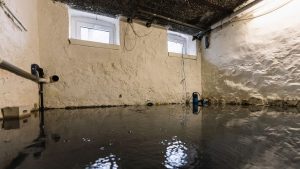
If you were unfortunate enough to have water infiltrate your home, of course extracting it is of the first order. But just because a surface is dry does not automatically mean all is well. Mold is not just unsightly, it destroys property, can sicken, and even kill you. 

Mold is tricky; it only needs 2 things to grow: water and cellulosic material (paper, wood) and contrary to some claims, one-size-fits-all solutions like washing with bleach, or using a mildew-resistant primer will not do the trick. Of the over 100K species of mold, roughly 10K of them are known to exist here in the northeast, and it is virtually impossible to know how harmful it might be just by looking at it. 

According to Frank Petrullo,owner and President of Envirocare Air Quality Restoration in Jefferson Valley NY, after water extraction there are 4 steps to genuinely assure mold will be kept at bay: Containment, to prevent  airborne spores from migrating to other parts of the house; Dehumidification; Treatment with targeted mold-retardant products and/or systems, and lastly Implementing recommended corrective actions. 

And even if your home escaped the storm unscathed, you may be surprised to know how ripe conditions are for mold to grow under everyday circumstances…are you sitting down? 

In a year, the average 2000 sf home can produce/develop enough moisture to fill 2 Olympic-sized swimming pools. Yes.  As Joel Schachter PE, professional engineer and owner of Precise Home Inspections explains- a number of factors like cooking, showers/baths, and weather and overall ventilation combine and can play real havoc with a home, even one that appears to be in good repair.

More on preventitives at another time, but meanwhile wishing a speedy rebound to all those affected by the storm